Drinking (Week 5)

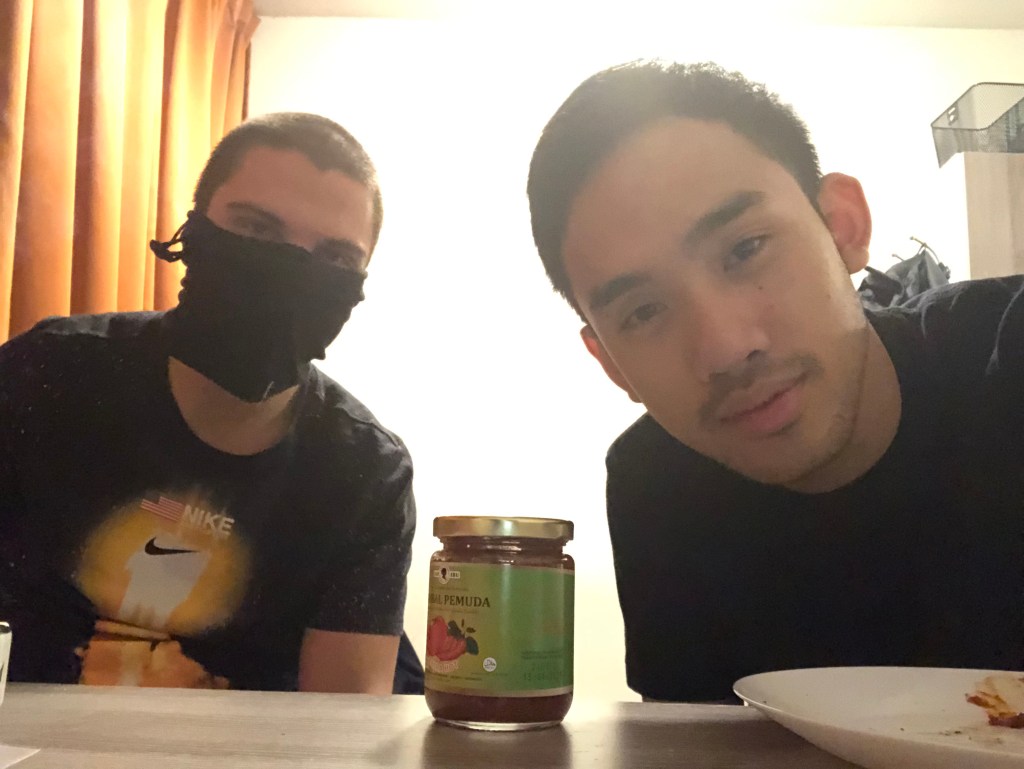
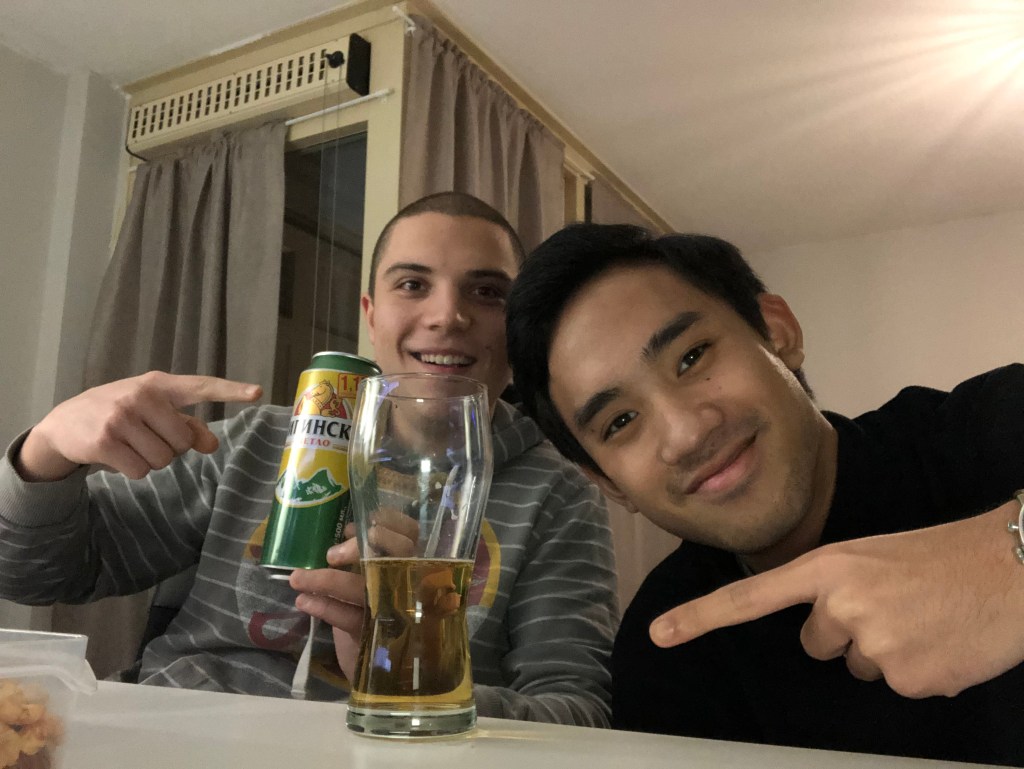
During the meet-up, Sultan got the chance to try a Bulgarian beer that Georgi has bought.

In Indonesia

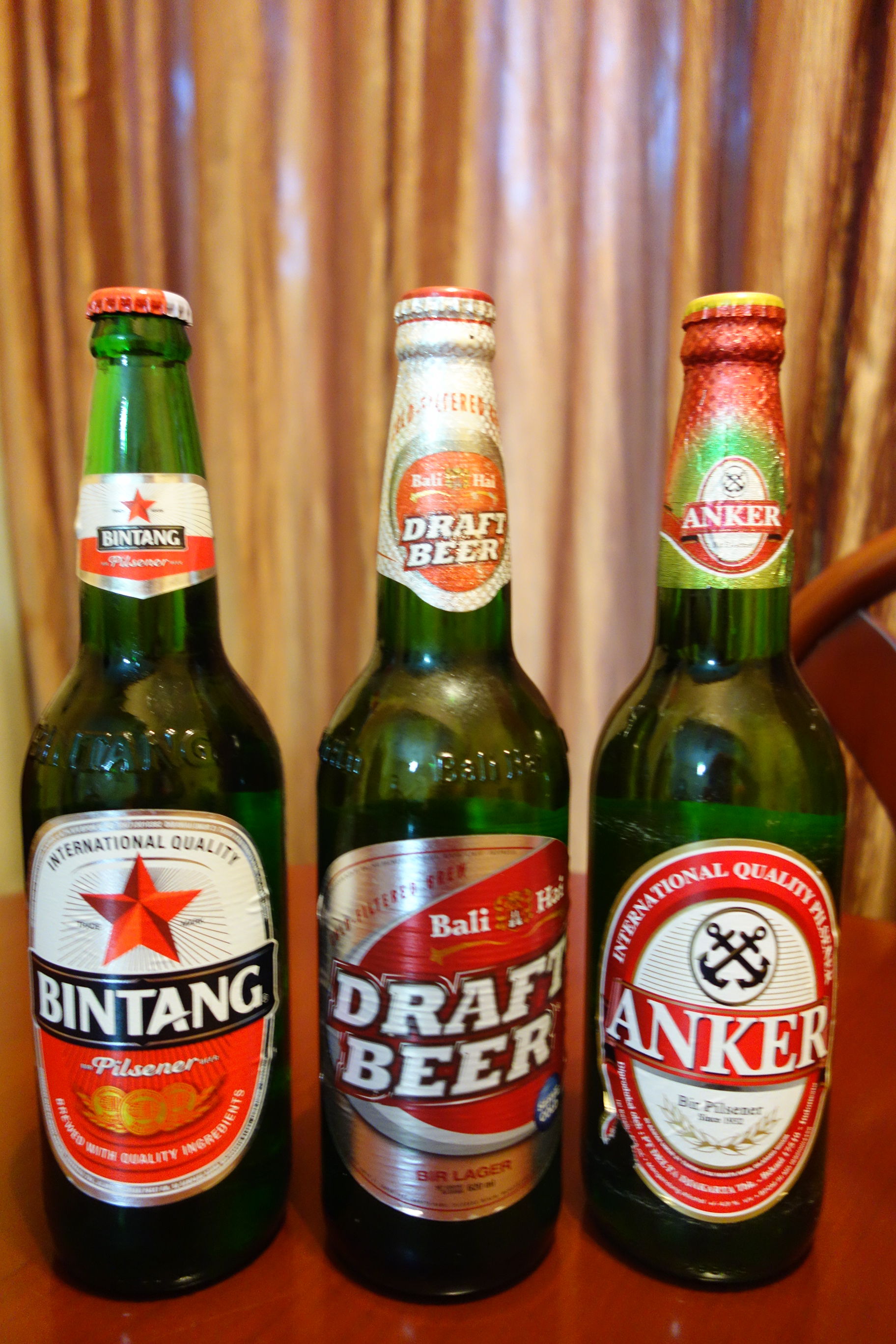
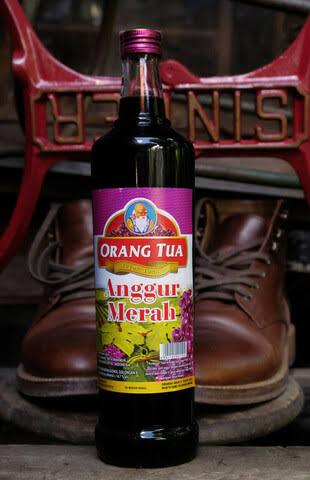
Currently, there is no restriction of alcohol products in Indonesia, with the exception of Aceh, a city in Indonesia that is a very religious territory and the only Indonesian province that is practicing the Sharia law officially. Despite this, drinking in Indonesia is sometimes socially unacceptable. To an addition, the Indonesian Police conduct raids regularly on shops that are selling alcohol products without a legal permission. The age limit of drinking in Indonesia varies depending on the place itself. There are some places that have an age restriction of 18 and there are some places with the limit of 21 years of age. However, nightlife are very popular in Indonesia, especially in the big cities such as Jakarta, Bali, Surabaya, etc. Indonesia have some infamous kinds of alcoholic drinks, with Anggur Merah being my personal favorite. Anggur Merah simply means Red Grape, its actual purpose was to be a traditional medicine, but people just consume it to party and get drunk! Like some other countries in the world, Indonesia also produce beers. There are quite a few local beer brands, the brands Bintang, Anker, and Bali Hai are among the infamous brands of Indonesian beer.
In Bulgaria

Drinking in Bulgaria is accepted by society as a normal part of our everyday life. Even underage drinking is treated as part of growing up and the age restriction of 18 is rarely taken seriously. A glass of “rakia” (traditional drink) is considered custom if you are eating “turshia” (traditional salad) for dinner. Despite our love for “rakia” we don’t limit ourselves to other sorts of alcohol. Other popular drinks in the country are wine, vodka, whiskey and beer.
In terms of occasions for drinking, it doesn’t really matter if there is one or not. The only things that matter is to be surrounded by cool people and the music needs to be loud! This is the secret to becoming №8 in the world for alcohol consumption (Daily Mail, 2019).
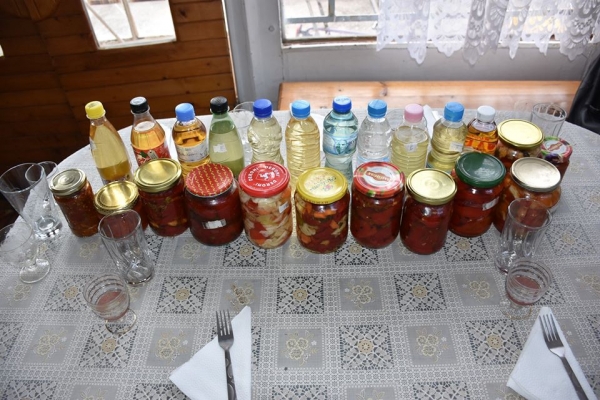
Mixture of homemade rakias and homemade turshias

Reference

Andrews, L. (2019). Americans are drinking more alcohol than they did ten years ago. Retrieved from https://www.dailymail.co.uk/news/article-7005483/Americans-drinking-alcohol-did-ten-years-ago.html?fbclid=IwAR1u4yaAey69y9hrmFBmK1juLzsb9UdVBOjd3c7W-k_JtPmg_PkiRLWxaa4

Music (Week 4)

Bulgarian Music

The Bulgarian music is multifaceted and layered into different periods and genres, which makes it extremely diverse. Trying to cover every different genre and its sub-genres would take forever so this is a short description of the most significant styles.

Traditional Folk music

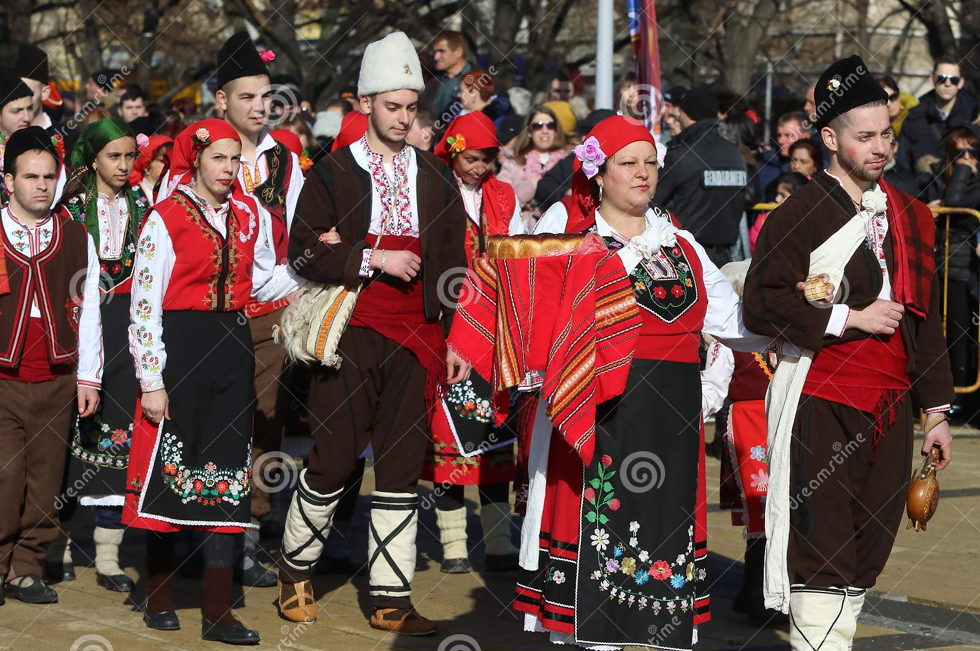
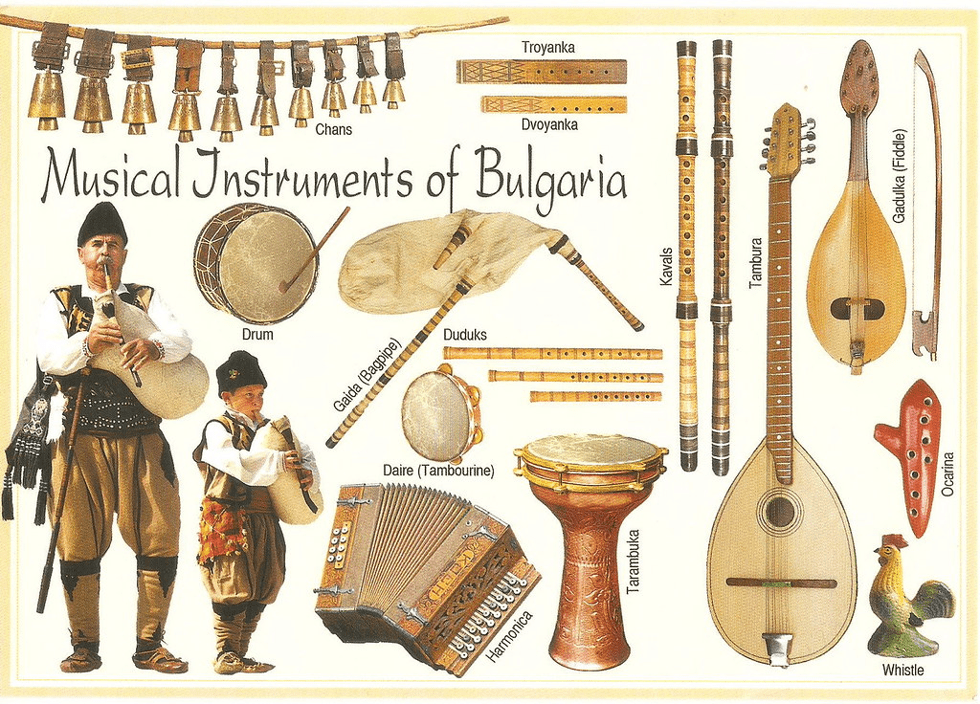
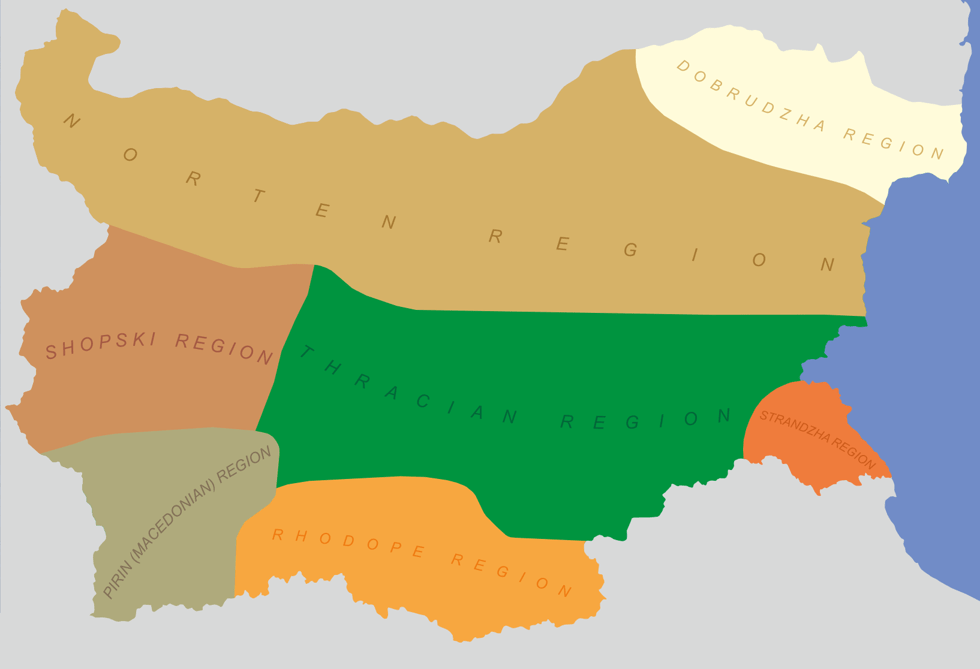
Originating in the 19th century, Bulgarian folk music has successfully captured the time period shortly before and after liberation (1878). The genre can be divided into 7 different regions (Picture 1). Each region has it’s a unique mixture of songs, dances and traditional clothing (Picture 2). The songs are typically performed using traditional musical instruments such as: “gaida”, “kaval”, “gadulka”, “tupan”, “tambura”, “tarabuka” and others (Picture 3). The most notable name in Bulgarian Folk Music is Valya Balkanska.

Pop-Folk (Chalga)

Pop-Folk music, or as it’s more commonly known- “Chalga”, is a mixture of oriental rhythm and the beforementioned traditional Bulgarian folk. The genre is typical for the Balkans and every country has its own twist on it. In Greece it is called “Laïkó”, in Serbia- “Turbofolk” and in Romania- “manele”. The genre has gained popularity in the 90s and songs from that period are called “retro-chalga” nowadays. An artist that has remained popular ever since his debut in the 90s is Azis. He has established himself as an icon of the genre.

Hip-Hop

Another style of music that has remained trendy through the years is Hip-Hop. The genre finds it’s origins in the 80s, but it’s considered as “underground” until the mid-90s when it gains more popularity. Artist like Misho Shamara, SPENS, 100 Kila and Upsurt help the genre grow immensely by creating labels and helping other artists produce. Nowadays the leading names of the genre are Boro Purvi, V:rgo, Itzo Hazarta (former member of Upsurt), FYRE and groups like SkandaU, BNR, Murda Boyz and MBT.

Indonesian Music

Talking about the traditional music of Indonesia can be a bit complicated since every city (or region, or province) has its own traditional song, music instrument, and even genre. However, I will try to produce a brief overview regarding the music in Indonesia, enjoy!

Dangdut

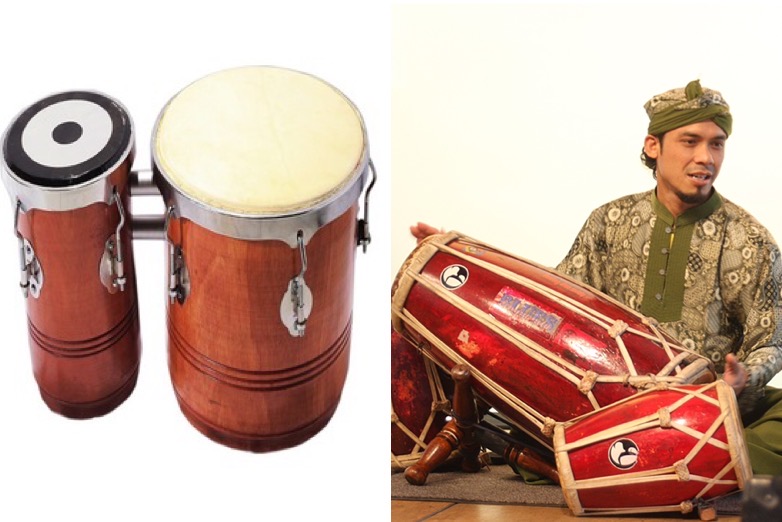
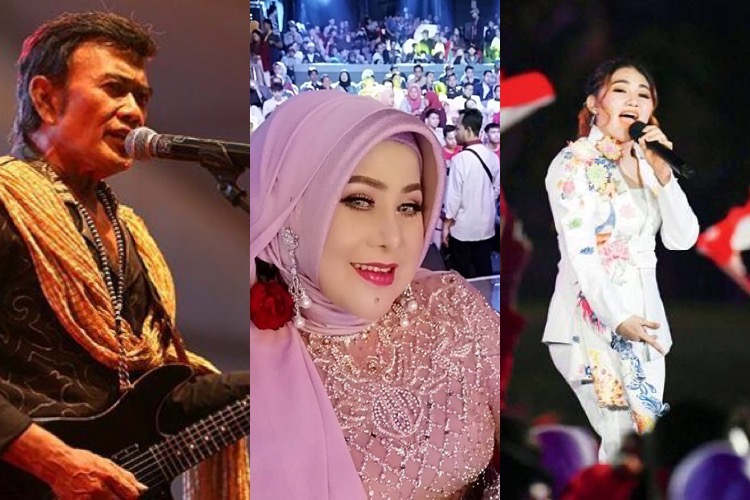
Dangdut is the most popular-local genre in Indonesia. It is a very unique genre that some people say is the combination between melayu and arabic/indian music. The beat from the tabla and gendang (or kendhang) is what makes Dangdut unique and special in a way. The most popular artists of the genre are: Rhoma Irama – who is known as the “King of Dangdut”, Elvy Sukaesih – also known as the “Queen of Dangdut”, Via Vallen – who sang the 2018 Asian Games Official Theme Song, and many more!

Keroncong

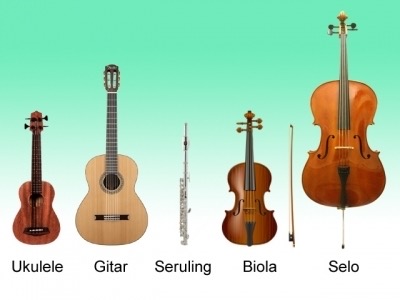
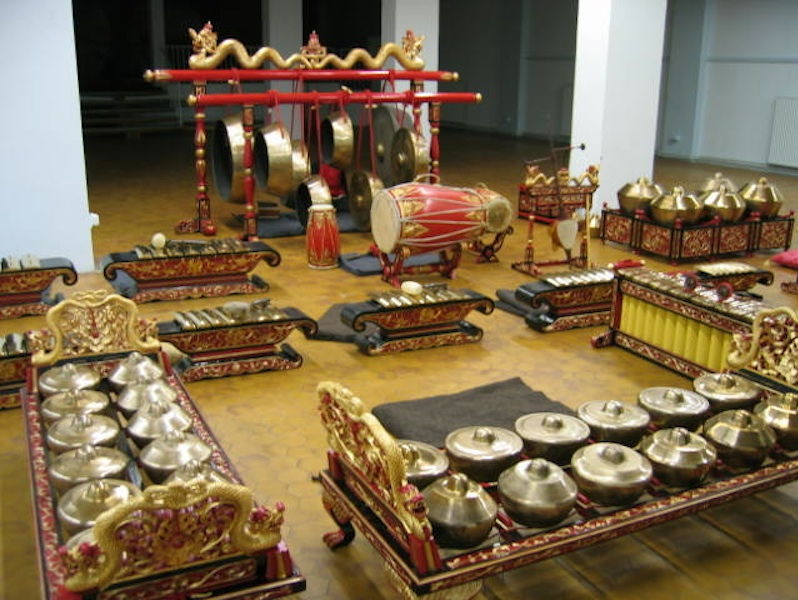
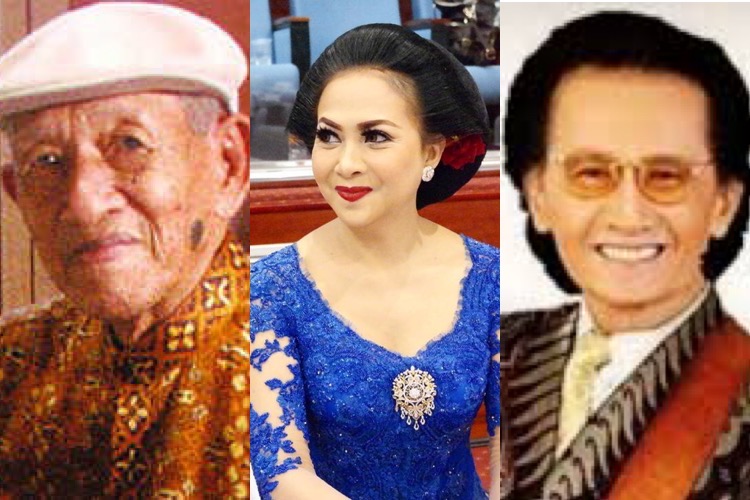
Keroncong or Kroncong (English) is an Indonesian musical style that makes the use of the Kroncong, which is a ukulele-like musical instrument. This genre was first introduced by the Portuguese sailors who came to Indonesia (then called Nusantara) in the 16th century. The instruments that are used in this genre include: Cuk (ukulele with nylon strings), Cak (ukulele with metal strings)Guitar, Flute, Violin, Cello, and Contrabass. The use of Gamelan, an Indonesian traditional instrumental ensemble, is also common in Keroncong. The popular Keroncong artists include: Gesang Martohartono, Sundari Soekotjo, and Mus Mulyadi.

Sports (Week 2)

Sports in Bulgaria

Bulgaria has established traditions in a great variety of sports. The most popular disciplines are Football, Skiing, Basketball, Volleyball, Wrestling and Weight Lifting. The country has a total of 214 Olympic medals (51 golds, 85 silver and 78 bronze), with almost half of them coming from wrestling and weight-lifting. Bulgarian weightlifters debuted at Olympic Games in Melbourne in 1956 when Ivan Abadzhiev placed 7th while Ivan Vasilev was fifth. The first medal for Bulgaria in weightlifting came in 1872 in Munich when Norair Nurikyan won the gold in the 60kg category. Yordan Bikov and Andon Nikolov also won gold medals in their categories. Mladen Kuchev, Atanas Shopov, and Alexander Kraichev added up to the success with 3 silver medals. This way the first Olympic Games became the most successful ones for Bulgaria’s weightlifting. From then on the sport brought a lot of glory to the country.
The best achievement of the national football team was a fourth-place finish at the 1994 FIFA World Cup in the United States. Even though more than 20 years have passed, Bulgarians still have great memories about that summer. One of the most iconic phrases in Bulgarian football comes from the qualifying game between France and Bulgaria. In that match Emil Kostadinov (Bulgarian forward) scores a 90th-minute winner and the commentator (Nikolay Kolev) repetitively starts to scream “God is a Bulgarian”. The phrase has become a symbol of all the positive emotions related to that memorable summer.
More recent successful athletes form the country are Grigor Dimitrov (Tenis), Ivet Lalova (Sprint), Dimitar Berbatov (former footballer), Kubrat Pulev (Heavy-Weight Boxer), Matey Kaziyski (Volleyball), Tsvetana Pironkova (Tenis) and others.

Sports in Indonesia

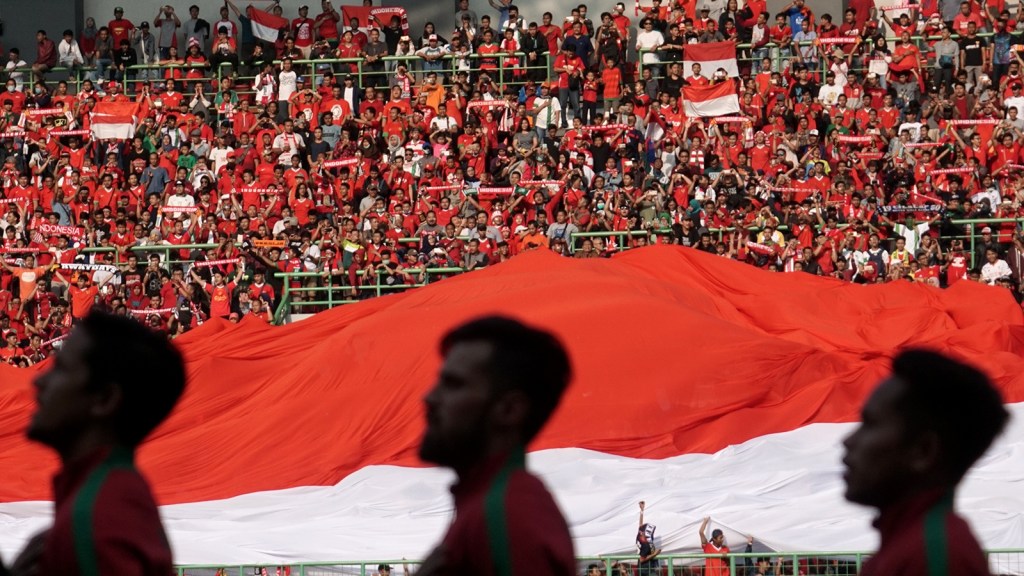
Like some other countries in the world, Indonesian people have so many passion about Football. As a matter of fact, it is the biggest sport in the country in terms of both participation and spectatorship. When it comes to football, the whole nation comes together as one to support the eleven players on the field. Despite having no major achievements in the last 20 years or so, the fans are still supporting the team with a heart full of passion and dreams. That is just how it is in Indonesia, people are CRAZY about football. Indonesian football, however, also has its dark side. When supporting teams turn into a massive brawl, it is not a new thing in our country. To a larger extent, when two arch rivals face each other, it is no longer about the outcome of the match, it is a matter of who and how many will make it home and alive. Luckily, the Indonesian Football Federation, PSSI, had took actions regarding this issue. In the last few years, no away fans are allowed to even come to the city and support their team when facing a bitter rival.

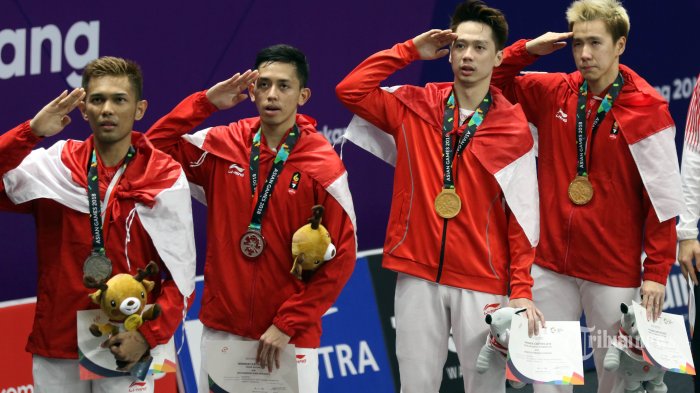
After football, it is safe to say that badminton comes 2nd in terms of the most famous sports in Indonesia. Not only it is popular in our country, unlike football, we are good at it, in fact we are one of the best in the world. According to the Badminton World Federation (BWF)’s website, an Indonesian athlete is ranked #5 in the world’s men’s singles ranking. In the women’s singles ranks, the best Indonesian athlete is ranked #24 in the world. In the men’s doubles category, our athletes are absolutely dominating. Out of the top five pairs in the world, three of them are Indonesians who are ranked #1, #2, and #5 in the world. In the women’s doubles and mixed doubles category, Indonesian athletes are also showing their capability to the world, with the best being ranked #8 and #5 in their respective category.

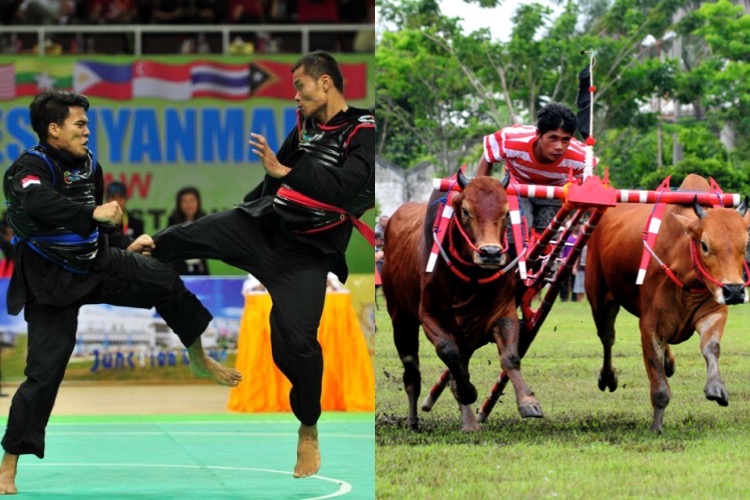
As a country with a very rich culture and history, Indonesia also has some traditional sports, such as Pencak Silat and Karapan Sapi. Pencak Silat is a martial-arts discipline which focuses on striking. In this sport, every part of the body is used to attack the opponent. Since 1987, Pencak Silat has been contested in the Southeast Asia Games, and in 2018, the sport made its debut in the Asian Games. The sport is co nsidered as an Intangible world heritage by UNESCO in December 2019. On the other hand, Karapan Sapi has never been contested internationally. It is basically the same as horse-racing, but instead of horse, it is actually a Sapi or cow that is competing. The sport is popular in the East Java territory.

Food (Week 3)

Indonesian cuisine

Indonesia is a country with very rich culture and traditions, or in this case, foods. If I have to list down the top five or ten must-try Indonesian foods, it would take me days to consider which foods to suggest. But if I was asked to name the most delicious foods in five minutes, I would easily name hundreds of them

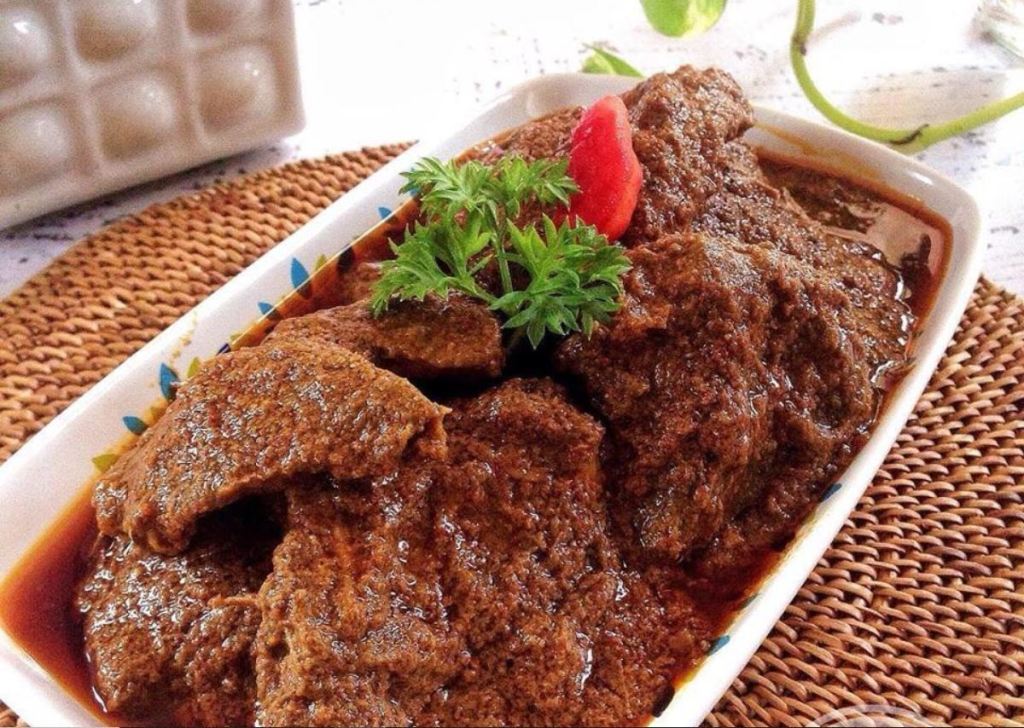
Rendang

Rendang is the food that every Indonesian would suggest people to try. Originated from the Minangkabau Region in West Sumatra, the food is a spicy meat dish made from meat that is cooked slowly in coconut milk and spice mixture. The process of making this dish can take up to six hours. In 2011, Rendang was ranked #1 on CNN International’s World’s 50 Most Delicious Foods: Reader’s Pick List.

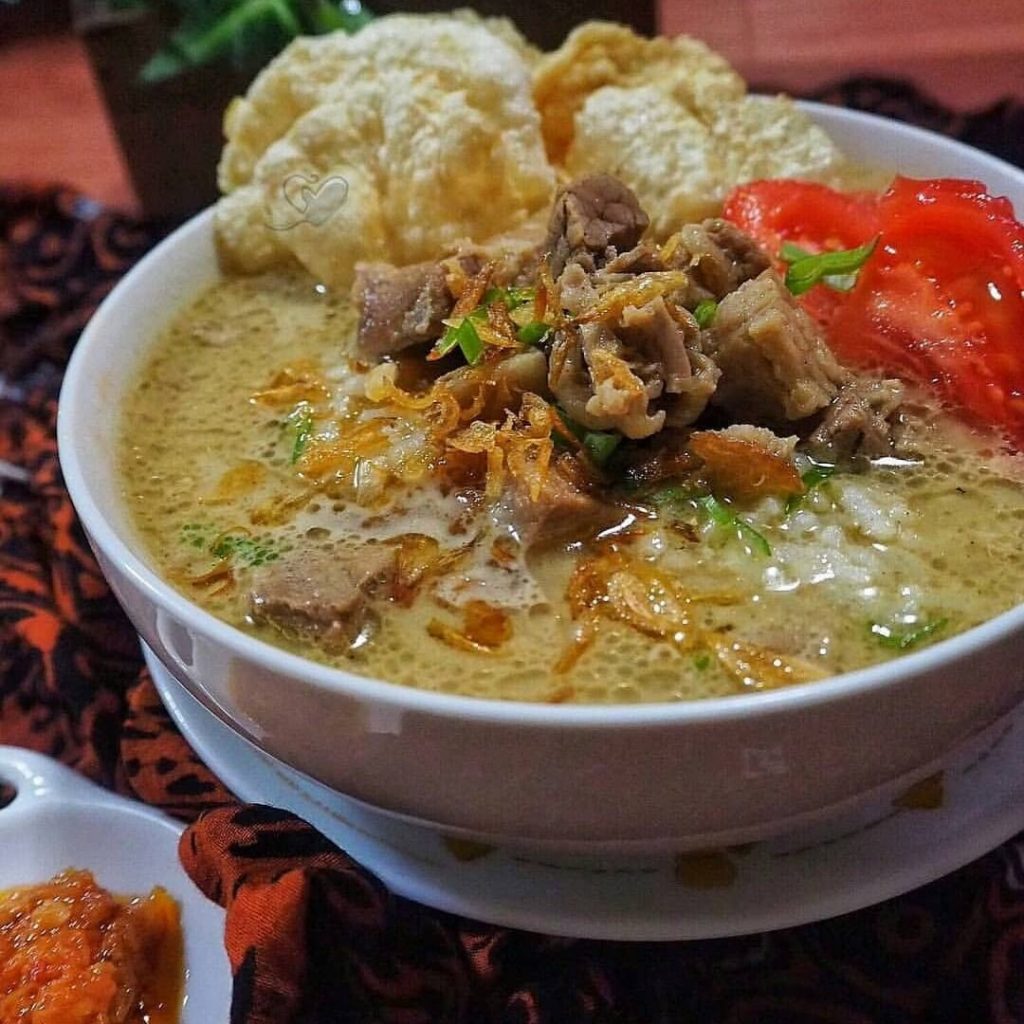
Soto Betawi

In Indonesian food, soto is a term used for many different types of soup originating from across the country – and just about every region has their own version of soto. Out of all the soto‘s I have tried, this one is my favorite. Soto Betawi is a traditional food of Jakarta. While most people prefer meat in the soto, I personally prefer the soto with beef innards, such as intestines, tripe, and lung. The soup itself is made from coconut milk, mixed with regular milk and various type of spices.

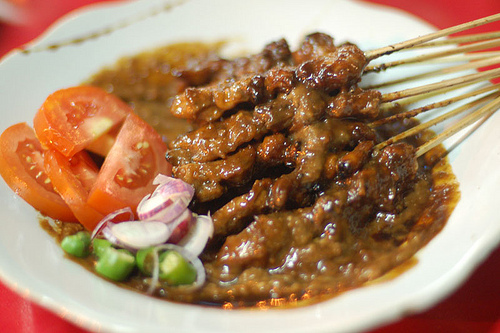
Sate Ayam

Sate is one of the most famous Indonesian dishes. The dish is made from meat on thin bamboo skewers, and grilled on an open charcoal fire. While the type of meat varies from beef, lamb, snakes, and others, the ayam (chicken) version is the most common one. Sate Ayam or Chicken Satay is served with loads of peanut sauce and either rice or rice cake.

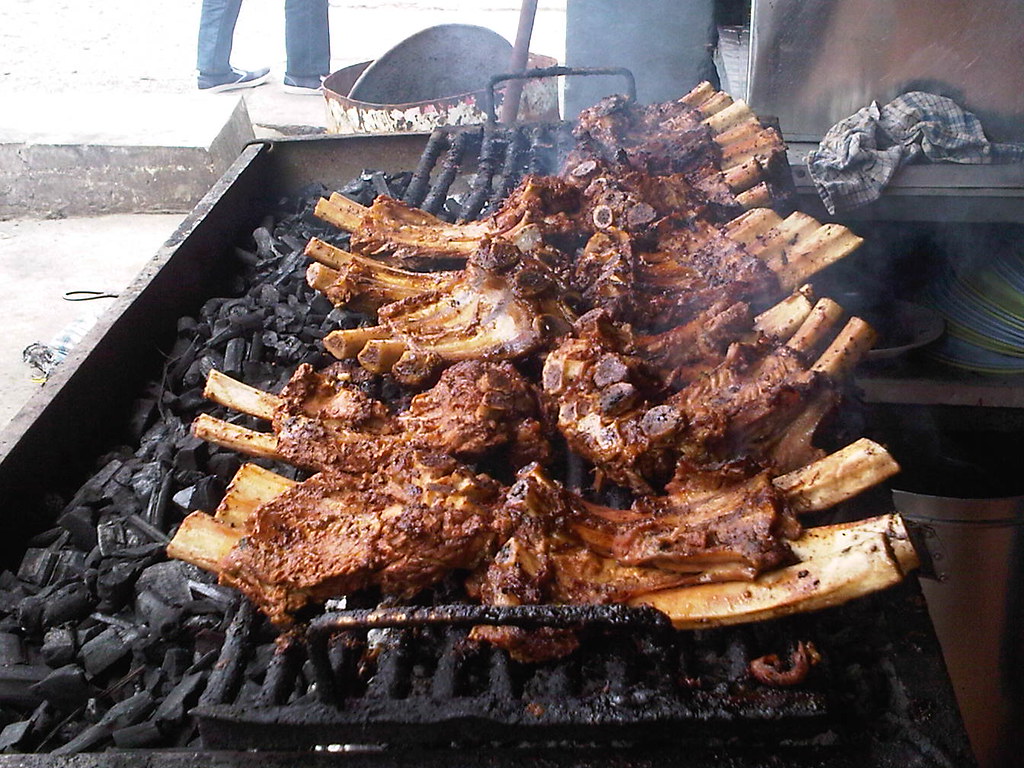
Konro is a beef ribs dish originated from Makassar, South Sulawesi. While the original version of konro is served as a soup, the grilled version of it suits my taste bud more. The grilled konro is beef ribs that is marinated in spices similar to the soup version, such as coriander seeds, galangal, tamarind, and many more. It is commonly served with a spicy peanut sauce.

Es Cendol

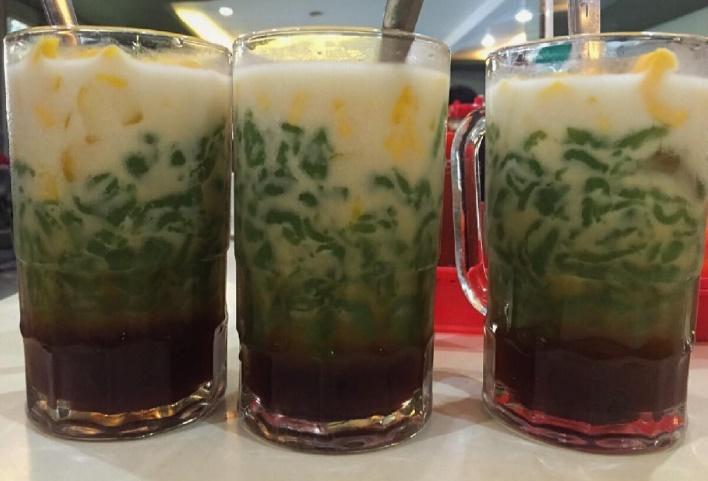
Cendol (or dawet) is an iced sweet dessert that is originated from Central and East Java territory. The dessert is consisted of green rice flour jelly, served in a mixture of coconut milk and palm sugar. Cendol can also be served with various toppings such as jackfruit, durian, and ketan item (Indonesian black sticky rice).

Bulgarian cuisine

Describing the Bulgarian cuisine using only words is impossible so you better book some tickets to enjoy our delicious food. In the meanwhile I have listed some of my personal favourites and must-try dishes:

Banitsa

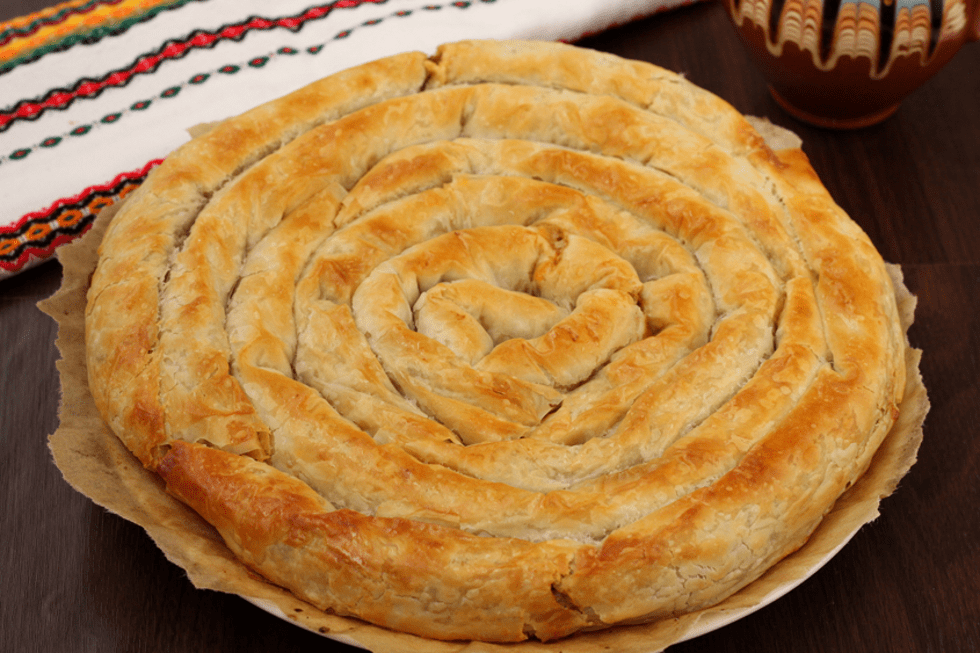
Banitsa is made by layering filo pastry with a mix of sirene (Bulgarian cheese that closely resembles feta) and whisked eggs. Other ingredients like vegetables, fruits and meat can be added to the mix to refresh the traditional taste. On New Year’s eve, the banitsa is typically served with hidden fortunes inside.

Tarator

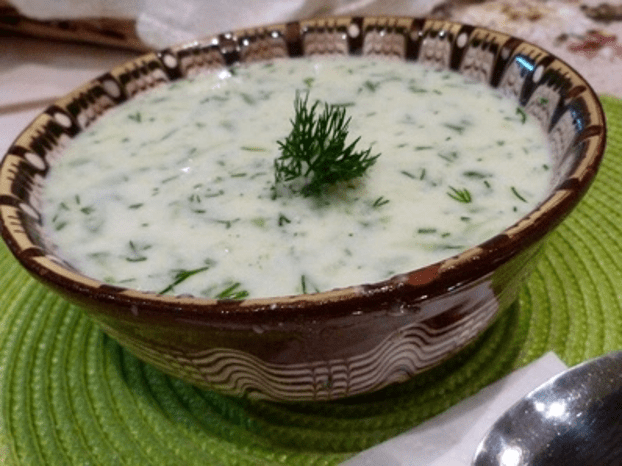
A simple, yet delicious way to refresh yourself in the summer. The summer soup is usually made of Bulgarian yoghurt, water, cucumber, salt and garlic, but it can also consist of walnuts and dill for added taste.

Shkembe Chorba

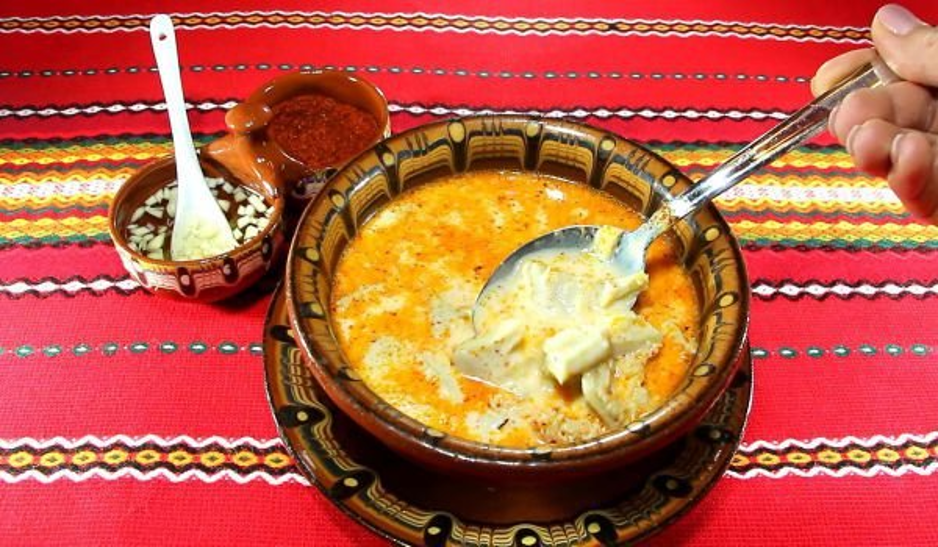
A personal favourite of mine, the shkembe chorba is a fantastic choice for a meal at any time of the day or year. It is widely considered to be a hangover remedy, which I approve. It is made of finely cut and boiled beef or pork tripe, seasoned with garlic, vinegar and hot red pepper. The soup combines perfectly with a glass (or maybe more) of beer.

Sarmi

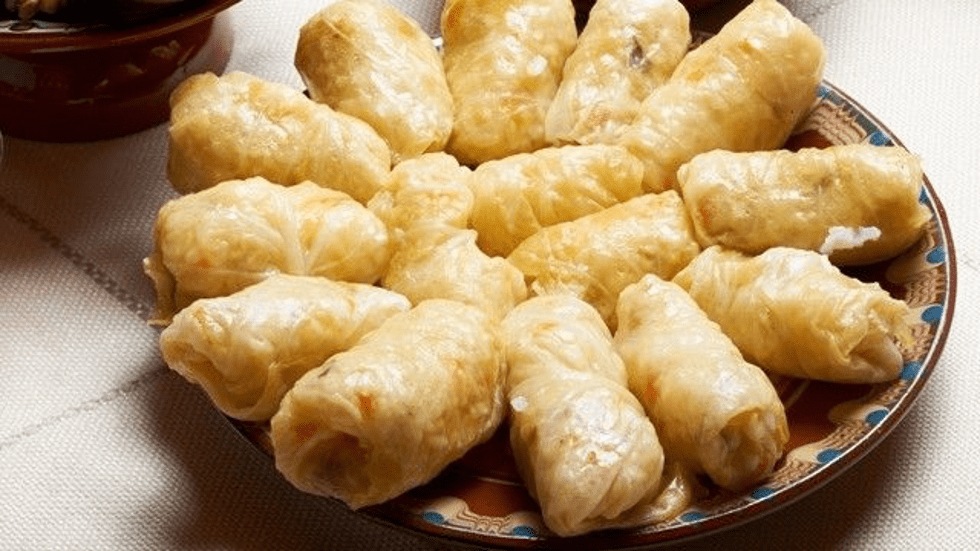
Another personal favourite! The sarmichki are made of rice and minced meat, wrapped inside cabbage or vine leaves (depending on the season). The meal takes a lot of time to prepare and is nowadays served mostly on special occasions (unless you have a lovely grandma that is always ready to make them for you <3).

Turshia

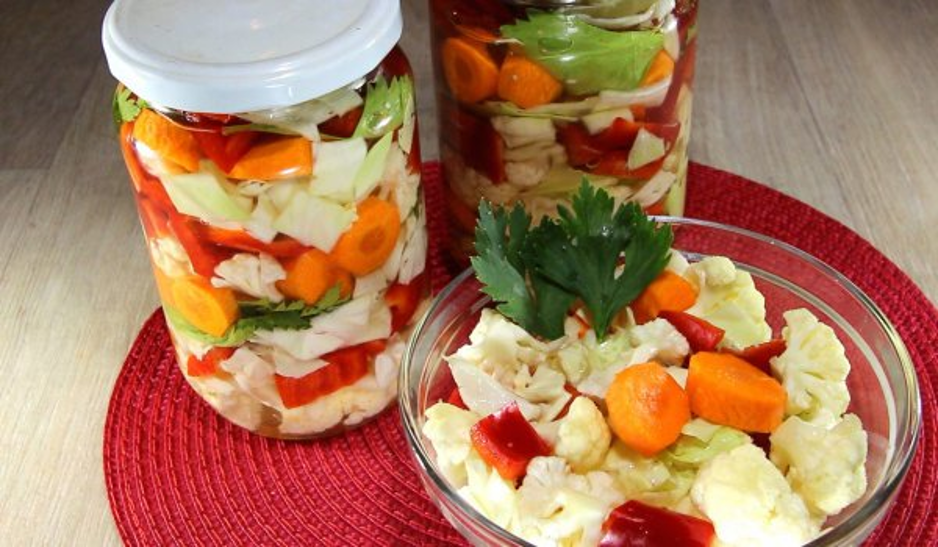
The turshia is a common winter side dish made out of various vegetables mixed with marinade (salt, vinegar, honey, sugar and pepper). The method of preparing the dish is very complicated and involves a lot of waiting. The process takes roughly a month and in the first two weeks, the jar needs to be flipped on a daily basis. When the turshia is ready it is mandatory to enjoy it with some rakia (Bulgarian alcohol).

Design a site like this with WordPress.com
Get started